
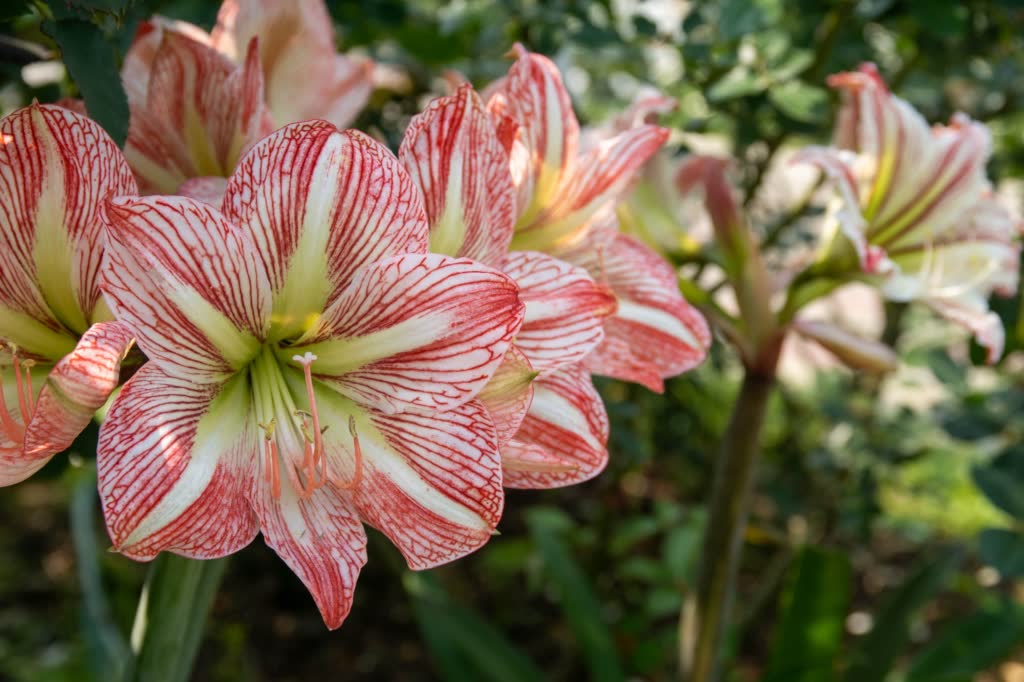
Few plants stop people in their tracks quite like a hippeastrum in full bloom. A tall, sturdy stem rises from the bulb and opens into a cluster of huge, trumpet-shaped flowers, often as wide as your hand. They come in reds, pinks, whites, oranges and striped or speckled combinations, and some even have double flowers.
Better still, they are among the easiest bulbs you can grow. Whether you have a large garden, a sunny balcony or just a bright windowsill, there is a way to enjoy hippeastrums. Here is everything you need to know about growing hippeastrums, from planting the bulbs to keeping them flowering year after year.
Where hippeastrums come from: origins and history
Hippeastrums are native to the tropical and subtropical Americas. Wild species grow from Mexico and the Caribbean down through Brazil, Peru and Argentina, from warm lowlands to the cooler slopes of the Andes. Many grow in places with a distinct wet season and dry season, which explains a lot about how they like to be treated in our gardens.
The name comes from Greek words meaning "horseman's star". Gardeners have been crossing different species for more than two centuries, beginning with the first recorded hybrid, raised by an English watchmaker named Arthur Johnson in 1799. Breeders in the Netherlands, South Africa and elsewhere have since produced the enormous range of colours and forms we see today.
Hippeastrum or amaryllis?
You will often see hippeastrums sold as "amaryllis", especially around Christmas in the Northern Hemisphere. The two are close relatives, but the true amaryllis (Amaryllis belladonna, or naked lady) comes from South Africa. It flowers in late summer on a bare stem before its leaves appear. If the label says amaryllis and the bulb is big and round with broad strappy leaves, it is almost certainly a hippeastrum.
Where to grow hippeastrums
In warm parts of Australia, including most of Queensland and coastal New South Wales, hippeastrums happily live in the garden all year round. They usually flower from spring into early summer. In cooler areas with frosts, they are best grown in pots that can be moved somewhere sheltered over winter.
In the garden, choose a spot with full sun to light shade. Morning sun with some afternoon protection is ideal in hot climates. The most important thing is drainage: hippeastrums hate sitting in wet, soggy soil. They look wonderful in groups along a path, at the front of a garden bed, or tucked among other plants that will fill the gap when they are resting.
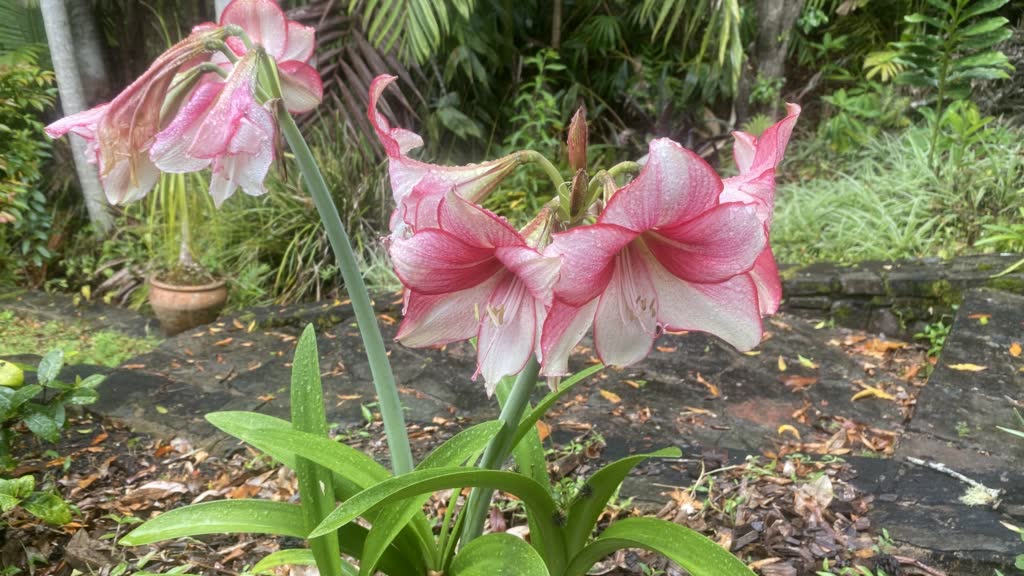
In pots, they make a striking feature on a patio, verandah or balcony. Indoors, a bright window gives you a living flower arrangement that lasts for weeks.
How to plant hippeastrum bulbs
Look for bulbs that are firm and heavy for their size, with no soft or mouldy patches. As a general rule, the bigger the bulb, the more flower stems it will produce.
In the garden, dig in some compost or well-rotted manure first. Plant the bulb so that its neck, the narrow top part, sits at or just above the soil surface. Space bulbs about 30 cm apart so they have room to multiply.
When growing hippeastrums in pots, choose a container only a little wider than the bulb, leaving about 3 to 5 cm of space around it. Hippeastrums flower best when slightly snug. Use a good-quality potting mix and plant the bulb with its top third showing above the mix. Make sure the pot has drainage holes.
Water well once after planting, then hold back until you see new growth. This is the most common place people go wrong: too much water before the roots are active can rot the bulb.
Watering and fertilising hippeastrums
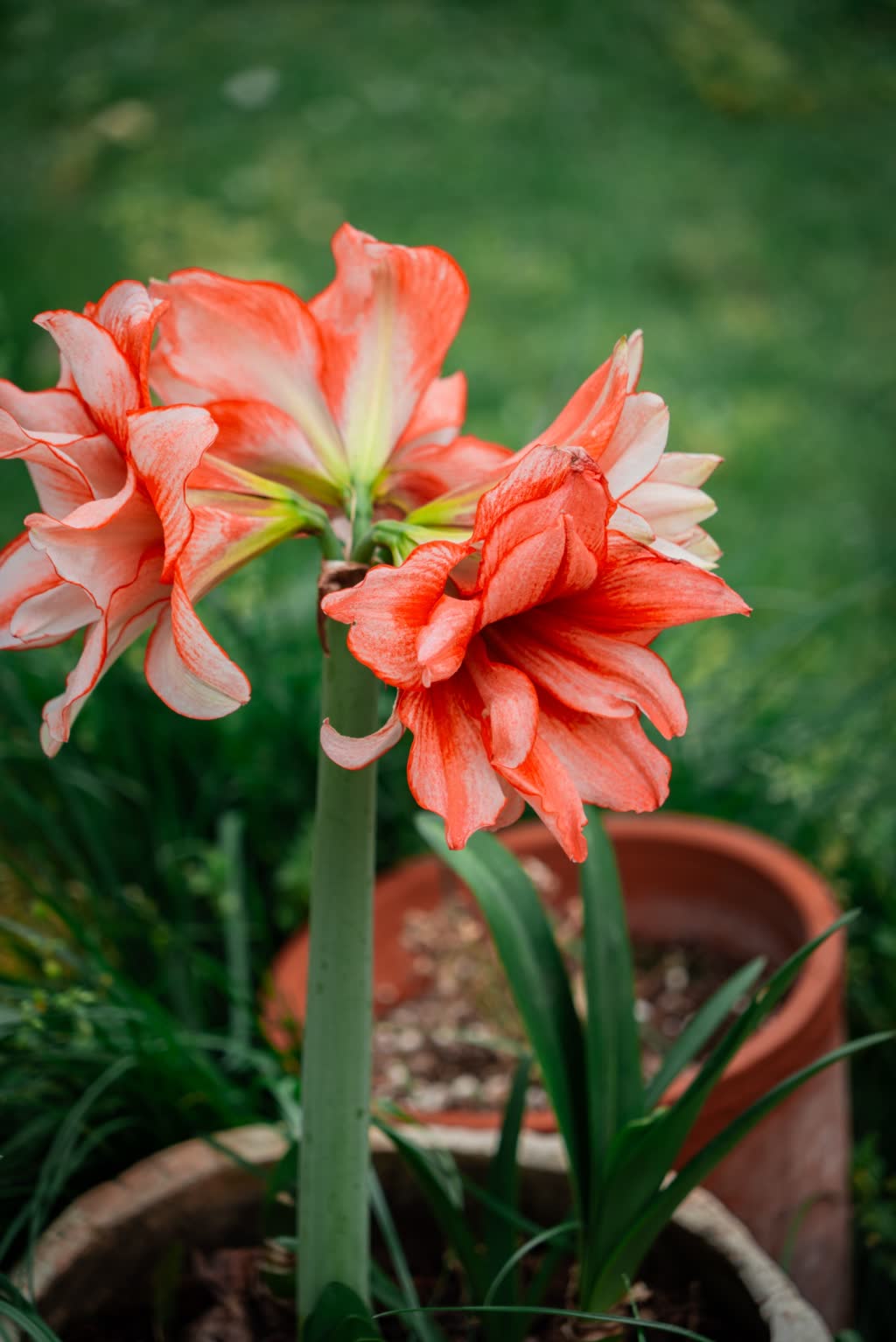
Once leaves and flower stems are growing, water regularly so the soil stays lightly moist but never waterlogged. Let the top few centimetres dry out between waterings. Plants in pots dry out faster than those in the ground, so check them more often in hot weather.
Hippeastrums are fairly hungry plants while they are in active growth. Feed them every few weeks with a liquid fertiliser, or use a slow-release fertiliser in spring. Products made for flowering plants or bulbs work well, because they are higher in potassium, which supports strong flowers. Keep feeding after flowering too, as this is when the bulb builds up energy for next year's display.
Hippeastrum care after flowering
When the flowers fade, snip them off so the plant does not waste energy making seed. Once the whole stem yellows, cut it off near the top of the bulb. Leave the leaves alone. They are the plant's solar panels, recharging the bulb for next season, so let them keep growing and only remove them once they turn yellow and wither.
In their natural home, many hippeastrums rest during a dry season. In the garden in warm climates, they often keep some leaves all year and need little extra attention. Potted bulbs, and those in cooler climates, can be given a rest: from late autumn, gradually cut back on water, then keep them fairly dry and frost-free over winter. Start watering again in late winter or early spring when new growth appears.
Over time, bulbs produce smaller offsets around their base. Every three or four years, or when a clump becomes crowded and flowers less, lift and separate them after flowering. Replant the bulbs with fresh compost, or pot up the spares to share with friends. Potted bulbs appreciate fresh potting mix every couple of years.
Common hippeastrum pests and problems
Hippeastrums are tough, but keep an eye out for a few common problems:
- Lily caterpillars: black caterpillars with yellow and pale stripes. They feed on the leaves, often in groups, then tunnel down into the bulb and can kill the plant. Check plants regularly, especially at the base of the leaves, and pick them off. An organic spray based on Bt (Bacillus thuringiensis) works best on young caterpillars, before they get inside the bulb.
- Snails and slugs: they love new flower buds, so protect young growth after rain.
- Red blotch: a fungal disease that leaves red spots and streaks on leaves, flower stems and bulbs, and can stop plants flowering. Remove damaged leaves, avoid wetting the foliage and give plants good airflow. Badly affected bulbs are best thrown out.
- Bulb rot: almost always caused by too much water or poor drainage.
- No flowers? The usual causes are too little sun, not enough feeding, or a bulb that was recently divided and needs a season to recover.
All parts of the plant, especially the bulb, are toxic if eaten, so plant them where curious pets and small children cannot dig them up.
Hippeastrum FAQs
No, although they are closely related and hippeastrums are often sold as amaryllis. Hippeastrums come from the Americas and have large, round bulbs with broad leaves. The true amaryllis comes from South Africa and flowers on a bare stem in late summer.
In the garden, most hippeastrums flower from spring into early summer, usually around October to December. Potted bulbs brought out of a winter rest may flower a little earlier or later, depending on when you start watering them again.
Yes. Hippeastrums are long-lived bulbs that can flower for many years. The key is to keep the leaves growing and feed the plant after flowering, so the bulb stores enough energy for the next season.
Yes, they make excellent indoor plants. Give them the brightest window you have and turn the pot every few days so the flower stem grows straight. Move them outdoors to a sheltered spot after flowering if you can.
Yes, and it is a fun project. Sow fresh seed on the surface of moist seed-raising mix and keep it warm. Be patient, though: seedlings usually take three to five years to flower, and the colours may differ from the parent plant.
Yes, all parts of the plant are toxic to dogs and cats if eaten, especially the bulb. Grow them where pets cannot dig, and contact your vet if you think your pet has chewed one.
Enjoying hippeastrums for years to come
With a sunny spot, good drainage and a little care after flowering, hippeastrum bulbs will reward you with bigger and better displays each year. Start with one or two in a pot, and you may soon find yourself collecting every colour. Have a hippeastrum question or a photo of your own blooms? Share it with the iCultivate community.



Get involved!
Comments