
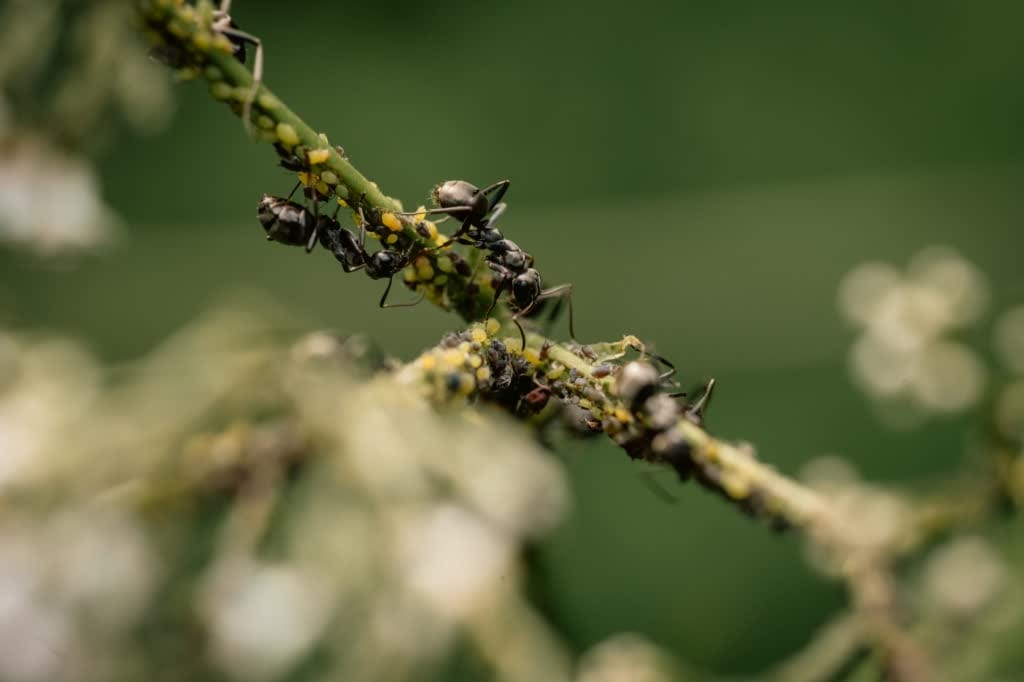
Aphids are one of the most predictable spring visitors in the garden. As soon as your plants push out that flush of soft new growth, aphids move in, and their numbers can build up remarkably quickly.
The good news is that aphid control doesn't have to be complicated. In this guide, we'll look at what aphids are, why they multiply so fast, where to find them, and the most effective ways to get rid of aphids naturally, starting with the simplest options first.
What are aphids?
Aphids are small, soft-bodied, sap-sucking insects, usually one to three millimetres long, though some species, such as the rose aphid, can reach around four. They feed by piercing plant tissue and drawing out the sap, which weakens new growth and can leave leaves curled, distorted or yellowing.
You'll most often spot aphids clustered together in colonies rather than on their own. Depending on the species, they may be green, black, grey, yellow or pinkish. A sticky residue on leaves, known as honeydew, is another tell-tale sign that aphids are feeding nearby.
Why aphid numbers explode in spring
There's a fascinating biological reason aphids appear so suddenly. Spring aphid colonies are made up entirely of females, which reproduce by parthenogenesis, meaning without mating. In much of Australia's milder climate, many aphids skip the sexual stage altogether and keep reproducing this way year-round, with numbers typically peaking in spring and again in autumn.
Rather than laying eggs, these aphids give birth to live young. Under warm spring conditions, those young reach reproductive maturity in around seven to ten days, and the cycle repeats continuously.
The result is that a small cluster of aphids can become a serious infestation within a week or two. It's why you can walk past a plant on Monday and find it covered by the weekend.
Most aphids in a colony are wingless. When a colony becomes crowded or the plant becomes a poorer food source, winged aphids develop and fly off to start new colonies on nearby plants.
Where to look for aphids
Aphids target soft, fresh growth, so check the newest parts of your plants first.
- Aphids on roses: look closely around new buds and growing tips, where colonies cluster tightly.
- Aphids on vegetables: brassicas (such as cabbage, broccoli and kale), broad beans and young tomato seedlings are common favourites.
- Under the leaves: aphids often shelter on leaf undersides, so turn a few leaves over when you inspect.
How to get rid of aphids
The best aphid treatment depends on how many you're dealing with. Start gently and only step up if you need to.
Hose them off
Before reaching for a spray, try a firm stream of water from the hose. It sounds basic, but physically dislodging aphids is surprisingly effective, particularly when you catch an infestation early.
Aim underneath the leaves as well as at the tips, and repeat every few days until numbers drop.
Use insecticidal soap or neem oil
If aphid numbers are heavier, insecticidal soap is a reliable next step. It's low impact, breaks down quickly and is suitable for edible plants. Because it works on contact and leaves no lasting residue, it needs to hit the aphids directly, and repeat applications are usually needed.
Neem oil is another natural aphid spray that works well. It acts more slowly than soap, mainly by putting aphids off feeding and disrupting their development. Choose a product labelled for aphids and follow the directions.
Apply sprays in the cooler part of the day, and avoid very hot days or water-stressed plants, as both increase the risk of leaf burn. Early morning is best: soap and oil sprays can harm any insect they touch, including beneficial ones, so spraying while bees and other helpful insects are less active reduces the risk to them.
Let beneficial insects help
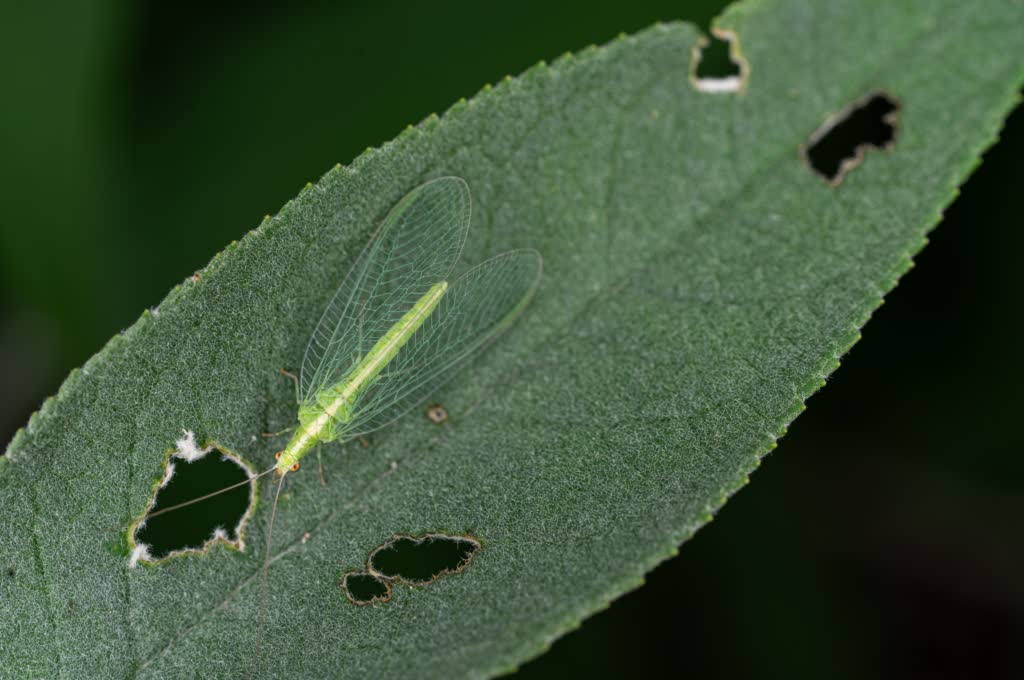
If you can hold off spraying for a few days, it's worth seeing whether nature steps in first. Ladybirds (both adults and larvae), lacewing larvae, hoverfly larvae and tiny parasitic wasps are all natural aphid predators, and they tend to follow aphids into the garden in spring.
Look out for bloated, papery, tan or bronze aphids. These are aphid "mummies", a sign that parasitic wasps are already at work, so leave them in place.
This is one of the easiest forms of natural aphid control, and it keeps your garden in better balance over the long term.
Keep an eye on ants
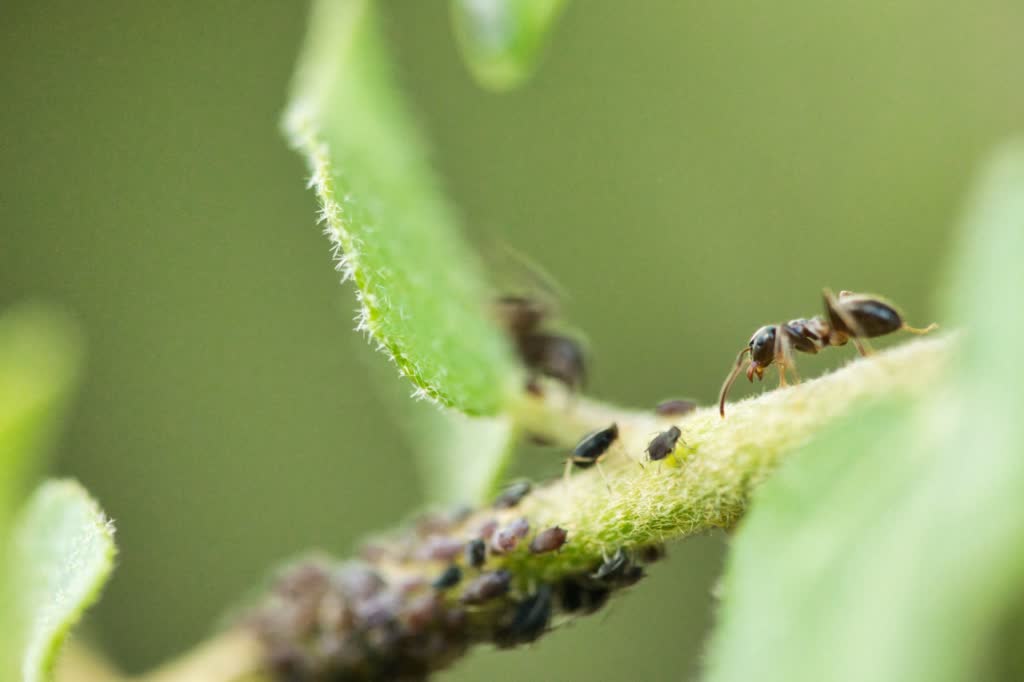
If you notice ants moving up and down affected plants, take it as a warning sign. Ants protect aphid colonies from predators in exchange for the sweet honeydew aphids produce.
That protection removes the natural check on aphid populations. Managing ant access can help tip the balance back in your favour, for example with a sticky barrier band around the stem of a shrub, or by trimming branches that touch fences, walls or neighbouring plants.
The key to aphid control: act early
The most important thing to remember about aphids is timing. A small colony dealt with promptly is straightforward to manage.
Once that reproductive cycle gets going at full pace, it takes considerably more effort to bring numbers back under control. Check your new growth regularly through spring, and you'll stay one step ahead.
FAQs about aphids
Aphids are drawn to the soft new growth plants produce in spring. Winged aphids fly in from nearby plants, and because the females reproduce without mating and give birth to live young, a few insects can become a large colony in a week or two.
Aphids rarely kill established plants, but heavy infestations can distort new growth, weaken plants and reduce flowering or harvests. Their honeydew can also encourage sooty mould, and some aphids spread plant viruses.
Start with a firm spray of water from the hose, repeated every few days. If that isn't enough, try insecticidal soap or neem oil, and encourage beneficial insects such as ladybirds and lacewings.
Yes, insecticidal soap is suitable for edible plants because it's low impact and breaks down quickly. Always follow the label directions, including any withholding period before harvest, and spray in the early morning to protect beneficial insects and reduce the risk of leaf burn.
Avoid broad-spectrum sprays and give predators time to arrive once aphids appear. Flowering plants such as alyssum, dill, coriander and calendula provide nectar and shelter for ladybirds, lacewings, hoverflies and parasitic wasps.
Ants farm aphids for their sweet honeydew and protect them from predators in return. Managing ant access to the affected plant helps natural predators get back to work.



Get involved!
Comments