
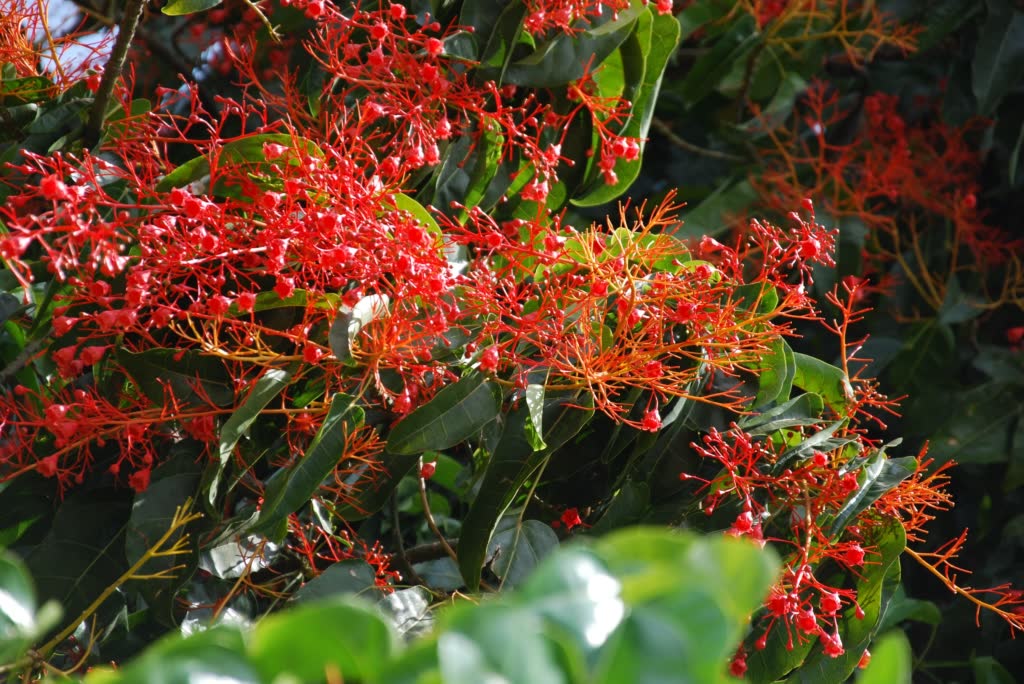
Over the next couple of months, you may notice trees around your area that look as though they’ve turned completely red. Many of them will be Illawarra flame trees, Brachychiton acerifolius. You’ll also hear it called simply the flame tree, or the flame kurrajong.
Where the Illawarra flame tree comes from
It’s an Australian native from the rainforests of the east coast. Its natural range runs in scattered patches from around Nowra on the New South Wales south coast, up to and through Queensland’s coastal rainforests of Cape York. The “Illawarra” in the name comes from the Illawarra region south of Sydney, where it was first identified in colonial times, but the Dharawal people have several names for it including; Couramyn.
What the botanical name means
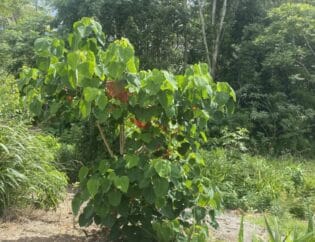
The botanical name tells you a bit about the plant. Acerifolius means maple-leaved, and the large, glossy leaves often have three to five lobes, a little like a maple. Brachychiton comes from Greek words meaning “short tunic,” which refers to the hairy coating on the seeds. It’s a relative of the kurrajong and the Queensland bottle tree.
When does the Illawarra flame tree flower?
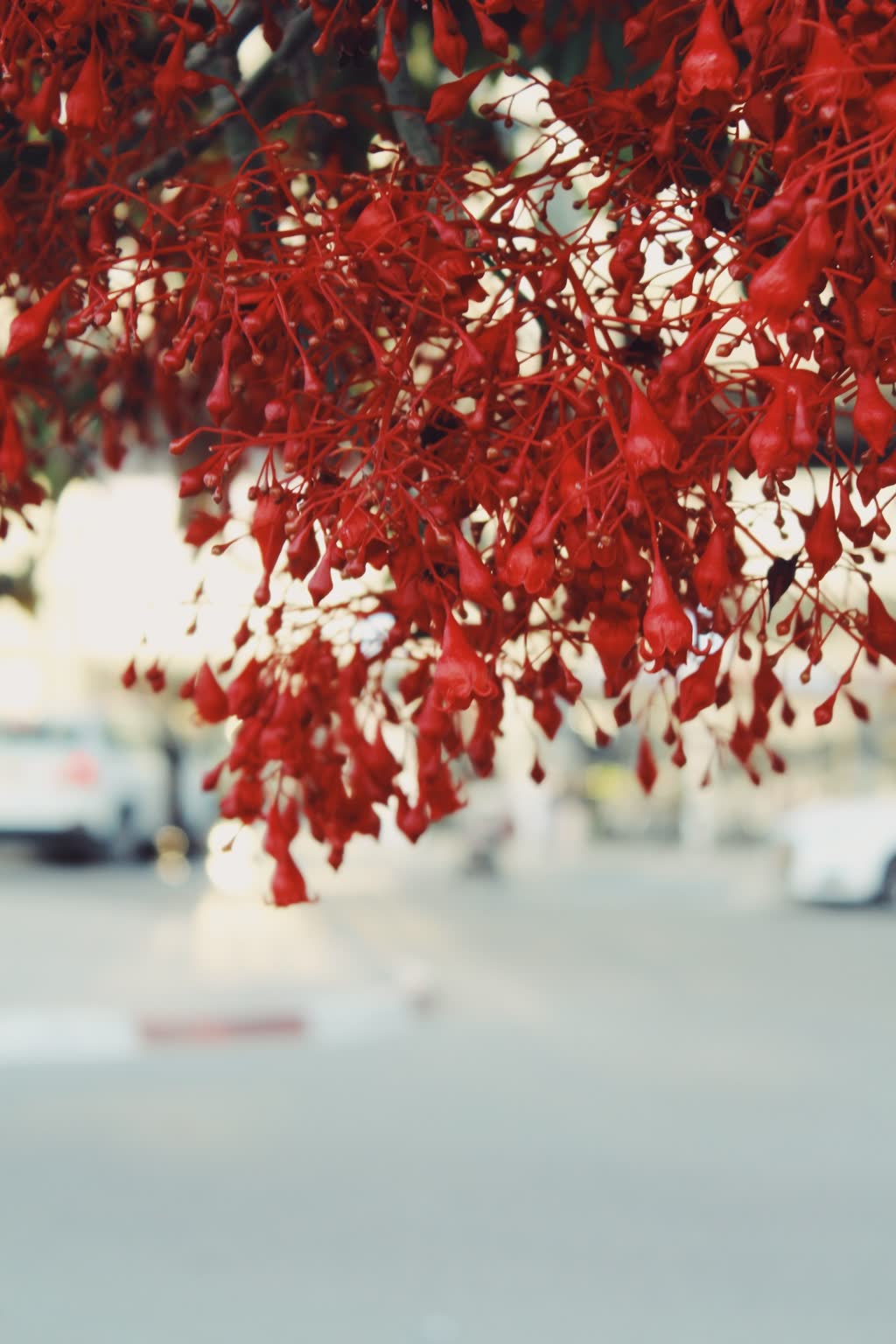
What most people notice is the flowering. From late spring into early summer, the tree often drops most or all of its leaves. Then it produces clusters of small, scarlet, bell-shaped flowers along the branches. Nectar-feeding birds and native bees love them.
It doesn’t flower the same way every year, though. In some seasons the whole tree flowers. In others, only part of it does. The display varies from year to year and is often heavier after a dry winter. So if your tree was patchy last year, that’s normal.
Growing an Illawarra flame tree
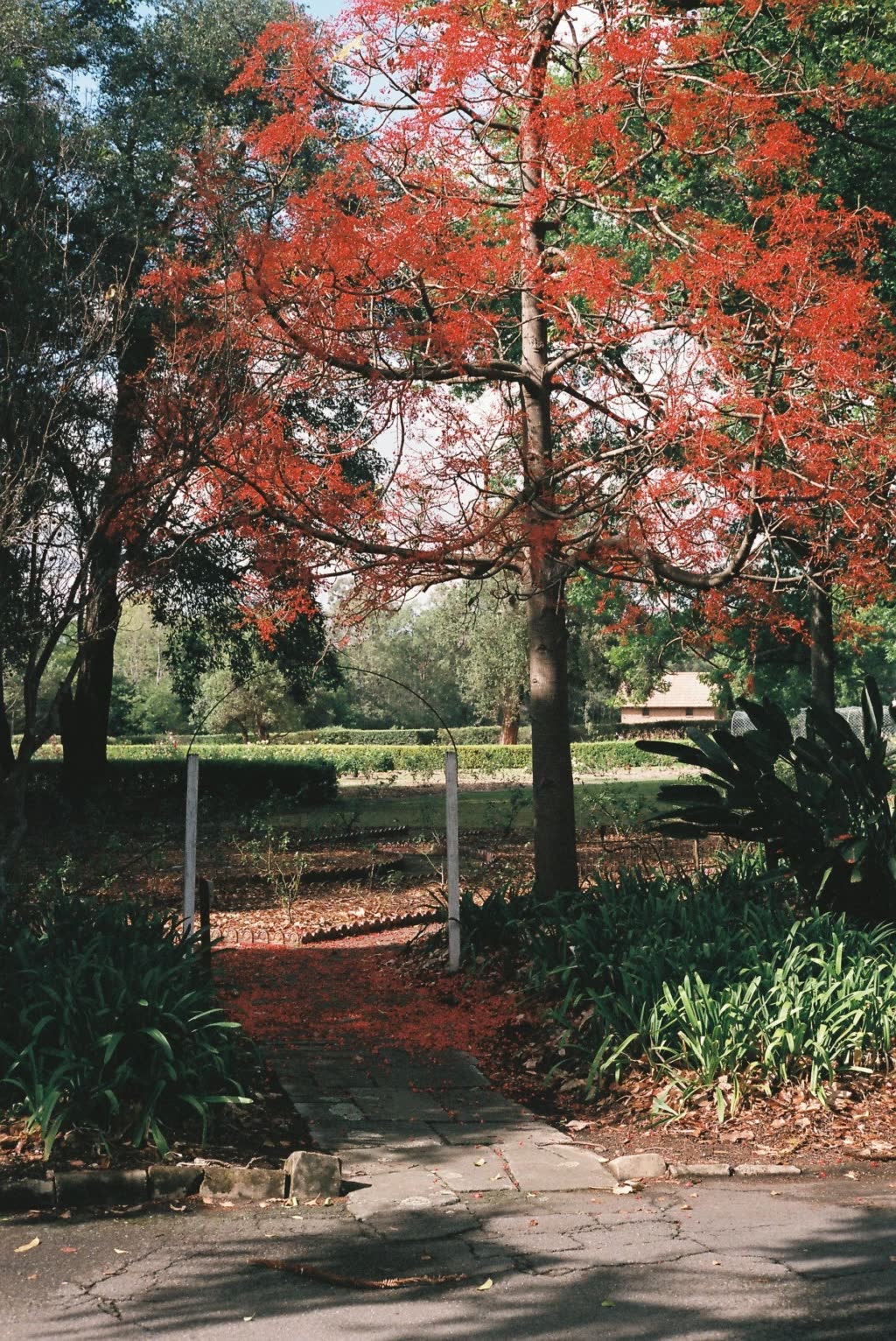
If you’re thinking of planting one, there are a few things to know. In the wild it can grow to 30 metres or more. In gardens it’s usually 10 to 15 metres tall, with a spread of around 10 metres, so it needs space and should go well away from the house. It prefers full sun to part shade and well-drained soil, and it’s drought tolerant once established. Established trees handle light frost, but young plants need protecting.
Be patient with trees grown from seed, which generally take five to eight years to flower. Grafted plants taken from good flowering trees flower much earlier. If you’d like flowers sooner, ask your nursery for a grafted plant.
Seed pods: handle with care
After flowering come boat-shaped pods about 10 centimetres long. They ripen over winter and split open to reveal rows of yellow seeds. Those seeds are surrounded by stiff hairs that irritate skin and eyes, so wear gloves if you are collecting seed or cleaning up fallen pods. The seeds are an example of “bush tucker” and were eaten raw or roasted, after removing the hairs.
Pruning
Illawarra Flame Trees need very little pruning. In most gardens, it’s best to let them keep their natural upright shape. First, remove any dead, damaged or crossing branches. You can also lift the lower limbs to clear paths or lawns. The best time to prune is just after flowering ends in early summer. That way, you won’t cut off next season’s blooms.
For young trees, light shaping helps create a single strong leader. However, avoid heavy cutting or topping. This spoils the tree’s form and encourages weak regrowth. It can also reduce flowering for several years. For large, established trees, call a qualified arborist instead.
Illawarra Flame Tree FAQs
The Illawarra Flame Tree (Brachychiton acerifolius) is an Australian native rainforest tree. It grows naturally along the east coast, from the Illawarra region south of Sydney up through Queensland. The name acerifolius means “maple-leaved.” This refers to its large, glossy, lobed leaves. It’s also a close relative of the kurrajong and the bottle tree. In fact, many gardeners consider it one of Australia’s most spectacular flowering trees.
Flowering usually happens from October to December. Before it flowers, the tree often drops most of its leaves. As a result, scarlet bell-shaped flowers cover the bare branches. This creates the famous “flame” effect. Dry weather in late winter and spring triggers the leaf drop. So the display is often most dramatic after a dry spell.
The main answer is patience. Trees grown from seed can take 5 to 10 years to flower, and sometimes longer. However, grafted nursery trees usually flower much sooner. Flowering is also quite erratic. Some years bring a full display, while other years bring only a partial one. Occasionally, you may see no flowers at all. In addition, a wet spring, too much fertiliser or heavy shade can all reduce flowering.
In gardens, this tree usually reaches 10 to 20 metres. In its natural rainforest habitat, though, it can grow much taller. Young trees have an upright, pyramid shape, and the canopy broadens with age. For best results, plant it in full sun with plenty of room. Keep it well away from buildings, paths and pipes. Ideally, choose a spot where you can see the canopy from a distance.
Yes, they need some care. The large, boat-shaped pods hold seeds surrounded by fine, stiff hairs. These hairs can irritate your skin and eyes. For this reason, wear gloves and avoid handling pods on windy days. Interestingly, the seeds were a traditional Aboriginal food. First, people removed the hairs, and then they roasted the seeds. Fallen pods can also create mess, so think carefully before planting near outdoor living areas.
Flame trees prefer well-drained soil and a warm, frost-free climate. That said, established trees can handle light frosts. Water young trees regularly. Once established, however, they cope well with drought. They need little fertiliser. In fact, a lean diet can encourage better flowering. Pruning is rarely needed. Finally, you can easily grow them from fresh seed. For faster flowers, though, buy a grafted plant.
The Illawarra Flame Tree rewards patience like few other plants. It may take years to flower for the first time. It also won’t put on the same show every season. But when it does, the sight is unforgettable. Bare branches fill with brilliant scarlet bells. To get the best results, give it full sun, good drainage, plenty of space and a lean diet. Then let nature do the rest. On Australia’s east coast, it attracts nectar-loving birds and bees. Once established, it also copes well with dry spells. In short, it brings real rainforest drama to the garden. So plant one for the long haul, and it will become the highlight of your garden every late spring.




Get involved!
Comments