
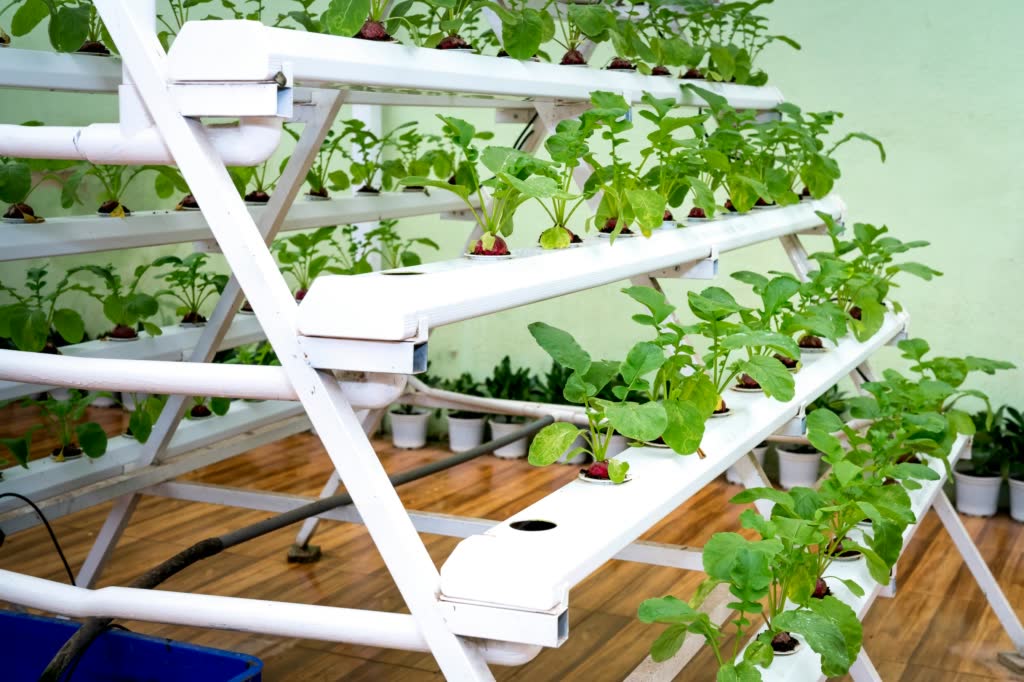
Imagine stepping outside every single day and harvesting crisp, fresh salad greens - no digging, no weeding, and absolutely no soil required. If that sounds appealing, then a hydroponic salad table that uses the Nutrient Film Technique (NFT) might be exactly what your garden has been missing. Whether you're completely new to hydroponics or simply curious about soil-free growing, this beginner's guide walks you through everything you need to know to get started with confidence.
I personally started on this journey about 5 years ago and I now can’t imagine not having my salad table as a part of our productive vegetable garden, so I hope you can get something from my own experiences.
What Is a Hydroponic Salad Table?
A hydroponic salad table is a purpose-built growing system that allows you to grow salad greens and leafy vegetables without soil. Plants are supported in a structured frame or table - best positioned at a comfortable working height - and receive all the nutrients they need through a carefully managed nutrient solution.
What attracted me to the "salad table" design is the same reason it is particularly popular with home gardeners - it is compact, tidy, and incredibly productive. It fits neatly on a patio, balcony, or in a backyard, and because it's elevated, it's also a fantastic option for anyone who finds bending or kneeling in the garden difficult or uncomforta
What Is the Nutrient Film Technique (NFT)?
The Nutrient Film Technique (NFT) is one of the most widely used methods in hydroponics. It is reliable, efficient, and well-suited to growing the leafy greens and salad crops that thrive in a salad table setup.
Here's how it works:
- A thin, continuous film of nutrient-rich water flows along the bottom of slightly angled growing channels or tubes.
- Plant roots sit in these channels, with the lower portion of the root constantly bathed in the moving nutrient solution.
- The upper portion of the roots is exposed to air, which provides the oxygen plants need to grow strong and healthy.
- The water is collected at the end of each channel, returned to a reservoir, and continuously recirculated using a submersible pump.
The key word here is film - the water layer is kept deliberately shallow. This ensures roots get both nutrients and oxygen at the same time, which is one of the reasons NFT systems produce such fast, vigorous plant growth.
Why Choose NFT for a Salad Table?
NFT is an excellent choice for beginners for several reasons:
It's simple to set up. The system has relatively few components - a reservoir, a pump, growing channels, and a timer. Once it's running, it largely takes care of itself.
It uses water efficiently. Because the nutrient solution is recirculated, NFT systems use significantly less water than traditional soil gardening. This makes it a sustainable and cost-effective choice for any home grower.
Plants grow faster. With direct access to nutrients and optimal oxygen levels at the roots, plants in an NFT system can grow up to 30–50% faster than in soil. That means quicker harvests and a more continuous supply of fresh greens.
It's low maintenance. Once your system is set up and your nutrient solution is balanced, day-to-day care is minimal. There's no weeding, no digging, and no soil-borne pests to worry about.
What Can You Grow in a Hydroponic Salad Table?
NFT systems are ideally suited to fast-growing, shallow-rooted plants. Some of the best crops to get started with include:
- Lettuce (all varieties)
- Spinach
- Rocket (arugula)
- Asian greens (bok choy, mizuna, tatsoi)
- Herbs such as basil, parsley, and coriander
- Silverbeet and Swiss chard
These crops typically reach harvest-ready size within 3–6 weeks, making a salad table one of the most productive growing systems you can have at home.
Key Components of an NFT Salad Table System
Before you get started, it helps to understand the main parts of the system:
The Reservoir: A tank or container that holds your nutrient solution. Size will depend on how many plants you're growing.
The Submersible Pump: Pushes the nutrient solution from the reservoir up to the growing channels. A basic, affordable pump is all that's needed for most home setups.
Growing Channels: These are the angled channels or tubes through which the nutrient film flows. Plants sit in net pots or cups inserted into holes along the top of each channel.
The Return Line: A pipe or hose that carries the nutrient solution back from the end of the channels into the reservoir, completing the circuit.
Net Pots and Growing Medium: Small net pots hold your seedlings in place. A lightweight growing medium such as clay pebbles or rockwool is used to support the plant and anchor the roots.
Nutrient Solution: A specially formulated mix of essential plant nutrients dissolved in water. Hydroponic nutrients are available in liquid or powder form and are typically added in two parts (Part A and Part B).
Setting Up and Maintaining Your System
Getting your NFT salad table up and running is a straightforward process, but there are a few key things to keep in mind:
Angle matters. Your growing channels need a slight downward slope - typically around 1:30 to 1:40 - to allow the nutrient film to flow smoothly without pooling.
Monitor your nutrient solution. Check the pH of your solution regularly, aiming for a range of 5.5 - 6.5. You'll also want to monitor the EC (electrical conductivity), which tells you the strength of your nutrient solution.
Keep your pump running. NFT systems rely on a continuous flow of nutrient solution. If the pump stops for an extended period, roots can dry out quickly. Many growers use a timer as a backup, but for most salad crops, a continuous flow is recommended.
Top up your reservoir. As plants absorb water and nutrients, the level in your reservoir will drop. Top it up regularly with fresh water, and replace the full solution every 1–2 weeks to prevent nutrient imbalances.
Ready to Get Growing?
A hydroponic salad table using the Nutrient Film Technique is one of the most rewarding and accessible ways to grow your own food at home. It's clean, efficient, and incredibly satisfying - especially when you're harvesting fresh greens just weeks after planting.
Watch my introductory video showing my own hydroponic setup and feel free to share your questions or experiences in the comments below. We'd love to hear how your growing journey is going!
FAQs
Not at all! An NFT salad table is one of the most beginner-friendly hydroponic systems available. If you can follow basic instructions and are willing to check your system every day or two, you have everything you need to get started. Most people are harvesting their first greens within 3–4 weeks of planting.
Costs vary depending on the size of your system and the equipment you choose. A basic starter setup for a small salad table can be put together for as little as $100–$200 AUD, while larger or more advanced systems may cost more. The ongoing costs - primarily nutrients and electricity for the pump - are quite low, making it a very cost-effective way to grow your own food over time.
One of the great things about an NFT salad table is how little daily maintenance it requires. A quick daily check to ensure the pump is running and the reservoir has adequate solution is all that's needed. A more thorough check - including testing pH and EC levels - is recommended every 2–3 days, and a full nutrient solution change every 1–2 weeks keeps everything in balance.
Yes, absolutely! An NFT salad table works well indoors, provided your plants receive adequate light. A sunny windowsill may be sufficient for some leafy greens, but for best results indoors, a dedicated grow light is recommended. Indoor setups are a fantastic option for anyone without outdoor space, or for year-round growing in cooler climate
Because NFT systems rely on a continuous flow of nutrient solution, a pump failure can cause roots to dry out relatively quickly - particularly in warm weather. It's a good idea to keep a spare pump on hand, and to check your system daily so any issues are caught early. Some growers also use a timer-based backup or an alert system for added peace of mind.
Absolutely - and it's a wonderful way to get kids excited about food and where it comes from! The system is clean, soil-free, and easy to work with, making it a great hands-on learning experience for children of all ages. From mixing nutrients to harvesting their first lettuce leaves, there's plenty for young gardeners to enjoy and learn from.






Get involved!
Comments