
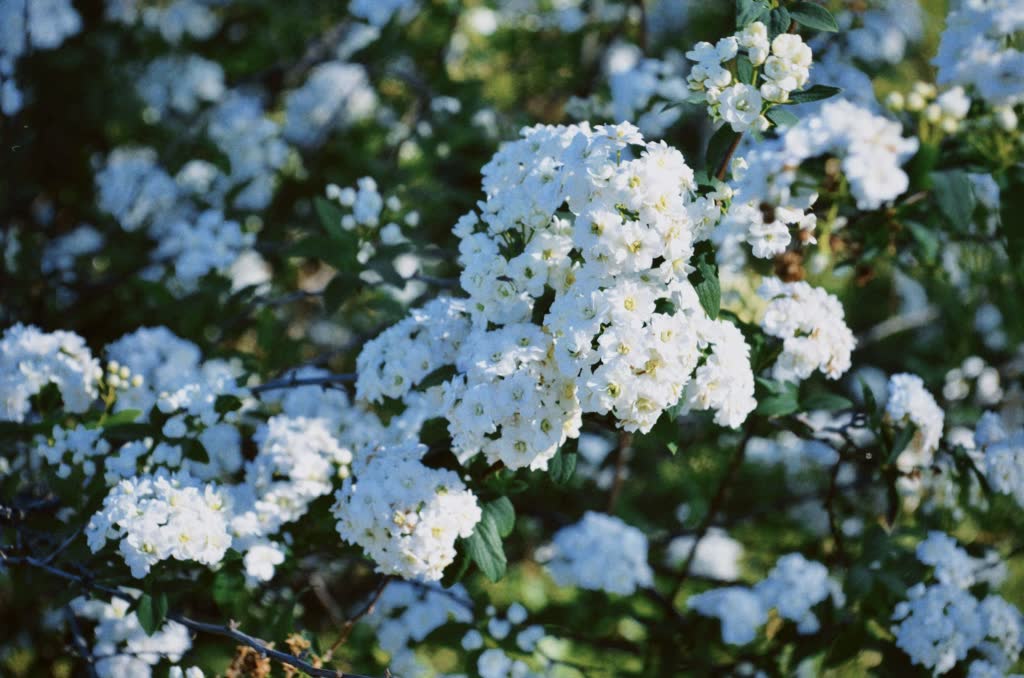
If you've driven through older suburbs or country towns in the last few weeks, you've probably seen shrubs with long, arching branches covered in small white flowers. There's a good chance that's May bush, and this is its time of year.
The botanical name is Spiraea cantoniensis. Spiraea comes from the Greek word for wreath, because the flowering branches were once used in garlands. The cantoniensis part refers to Canton, the old name for Guangzhou in southern China(opens in new tab), where the plant comes from. It belongs to the rose family, and you'll sometimes see it sold as Reeves Spirea.
The name "May bush" can be a bit confusing here, because ours flowers in September and October. In the Northern Hemisphere it flowers in May. The plant came here and changed seasons, but the name stayed the same.
May Bush is a shrub that loses its leaves in colder areas and holds on to some of them where winters are mild. It grows to around two metres or a bit more, and it's often wider than it is tall. The flowers form small rounded clusters along the full length of each stem, so when it's in flower the branches bend over with the weight. There's also a double-flowered form, usually sold as 'Lanceata', with small pompom-like blooms.
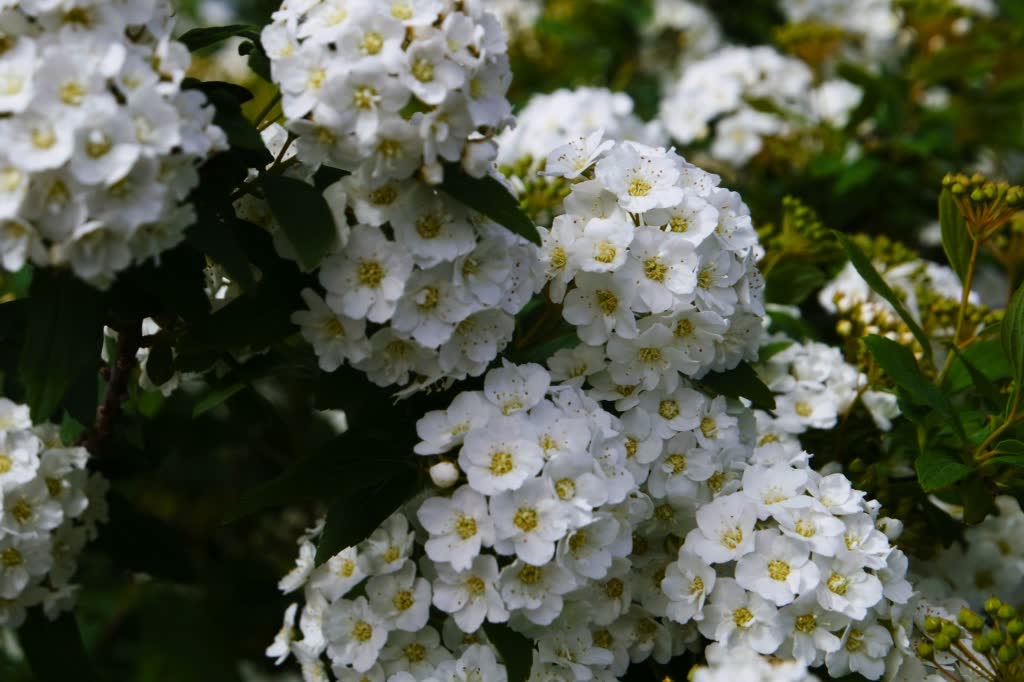
What makes May bush useful is how many climates it handles. It grows in most parts of the country, including cold inland areas, and does well from the tablelands and Sydney up into southeast Queensland. It isn't suited to the tropics. Give it full sun in cooler areas, and some afternoon shade in warmer districts so the leaves don't scorch. Plant it in soil that drains(opens in new tab) reasonably well. Once it's established, it handles dry spells fairly well.
The one thing to get right is pruning. May bush flowers on the growth it made the previous season. If you prune(opens in new tab) it in winter, you cut off the coming spring's flowers. The time to prune is straight after flowering finishes. A good approach is to remove about a third of the oldest, woodiest stems right down at ground level. That encourages new arching growth from the base and stops the shrub getting congested. Try not to clip it into a tight ball, because the natural fountain shape is much of its appeal.
After pruning, feed it with a general-purpose or controlled-release fertiliser and add a layer of mulch. It's generally trouble-free.
May bush works well as an informal hedge, at the back of a cottage garden bed, or along a fence.
So if you see one flowering in your street this week, now you know what it is and if you have one at home, keep the secateurs away until the flowers have finished.
May Bush FAQs
Prune straight after it flowers, usually in late spring. May bush flowers on wood that grew the year before. If you prune in winter, you cut off the coming season's flowers. Each year, take about a third of the oldest canes right down to the base. This keeps the shrub open and full of new arching stems.
The most common reason is pruning at the wrong time. Too much shade is another, because it needs at least half a day of sun to flower well. A lot of high-nitrogen fertiliser can also cause it, since the plant puts out leaves at the expense of flowers. Older plants that haven't been thinned out for years can also flower less.
Yes. Spiraea cantoniensis handles subtropical conditions better than many other spiraeas, which is why it's common in older Queensland and northern NSW gardens. In warmer areas it may stay partly evergreen and flower a bit less heavily than in cooler districts. It copes well with frost.
Expect about 1.5 to 2 metres tall and about as wide. It makes a good informal hedge or screen if you plant it around 1 metre apart. Don't clip it into a formal shape, because that takes away the arching habit and many of the flowers.
Take semi-hardwood cuttings in late summer, or hardwood cuttings in winter. Make them 10 to 15 centimetres long and set them in a free-draining propagating mix. Established plants also send up suckers, which you can dig out with some roots attached and replant.
It does well in most well-drained soils and is fairly drought tolerant once established. After flowering, give it a general slow-release fertiliser and some compost or mulch. Pests are rarely a problem. Watch for aphids on soft new growth in spring, and powdery mildew where air movement is poor.




Get involved!
Comments