
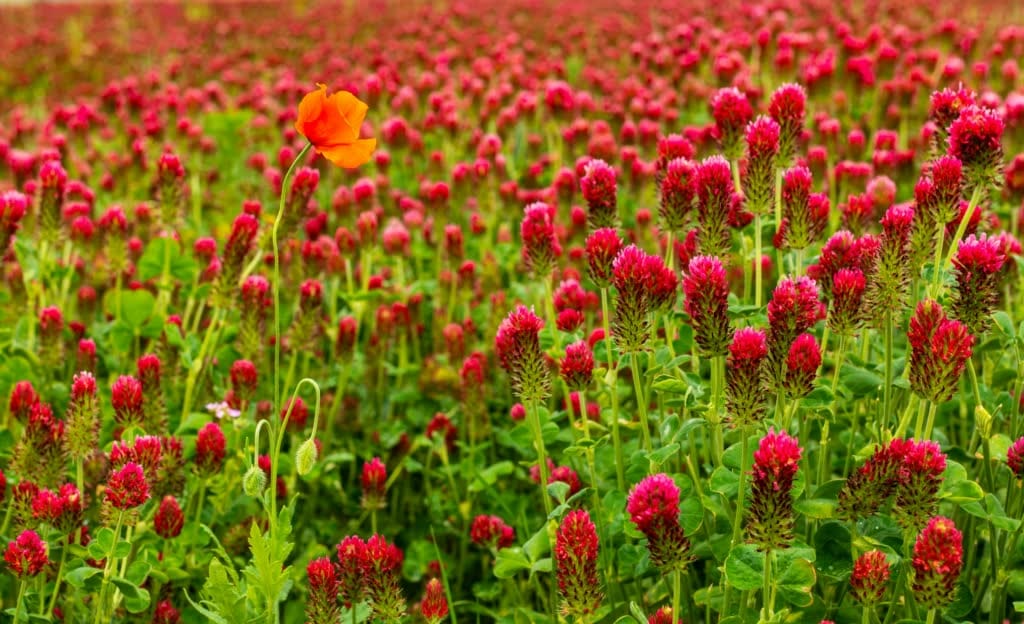
Crimson clover (Trifolium incarnatum) is a standout plant in sustainable growing systems, valued for its ability to fix nitrogen, improve soil health, suppress weeds, and attract beneficial insects and pollinators. While crimson clover has long been used as a cover crop in vineyards, it is equally effective in home gardens, orchards, and community growing spaces.
With its vivid red flowers and fast-growing habit, crimson clover supports healthier soils and more resilient ecosystems. For vineyard managers, gardeners, and growers looking to reduce chemical inputs and work with nature, crimson clover is a practical and accessible solution.
What Is Crimson Clover?
Crimson clover is an annual legume native to Europe that has become widely adopted in agriculture and gardening systems around the world. It grows quickly, establishes easily, and produces dense foliage topped with striking crimson-red flower heads.
As a legume, crimson clover forms a symbiotic relationship with nitrogen-fixing bacteria in the soil. This natural process allows it to capture nitrogen from the atmosphere and convert it into a form plants can use, making it one of the most effective nitrogen-fixing cover crops available.
Crimson Clover as a Nitrogen Fixer
One of the primary reasons crimson clover is used in both vineyards and gardens is its nitrogen-fixing ability. Nitrogen is an essential nutrient for plant growth, yet it is often depleted through repeated cropping, mowing, or harvesting.
In vineyards, crimson clover is commonly planted between vine rows to replenish soil nitrogen naturally. As the clover grows, nitrogen accumulates in its root nodules. When the plant is mown or incorporated into the soil, this nitrogen becomes available to grapevines and soil organisms over time. This slow-release effect helps maintain balanced vine growth without excessive vegetative vigour.
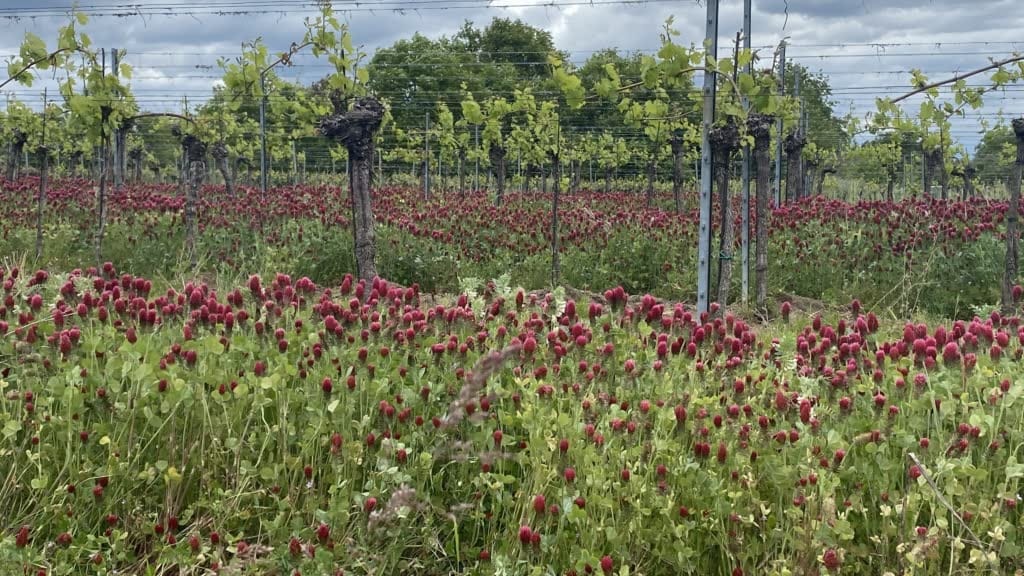
In home gardens, crimson clover can be grown in fallow beds, vegetable plots, raised beds, or around fruit trees. It is especially useful before planting nitrogen-hungry crops such as leafy greens, corn, brassicas, or squash. By using crimson clover as green manure, gardeners can reduce or eliminate the need for synthetic fertilisers.
Improving Soil Health and Structure
Beyond nitrogen fixation, crimson clover plays a vital role in improving overall soil health. Its root system helps loosen compacted soils, improving aeration and water infiltration. This is particularly beneficial in vineyards where machinery traffic can compact soil over time, as well as in garden beds that experience frequent foot traffic or repeated planting.
As crimson clover grows and decomposes, it adds organic matter to the soil. Increased organic matter supports beneficial soil microbes, improves nutrient cycling, and enhances moisture retention. Healthier soils are more resilient to drought, heavy rainfall, and temperature extremes—an important consideration for both vineyards and home gardens.
Crimson clover also acts as a living mulch, protecting soil from erosion caused by wind and rain. This protective ground cover helps maintain soil structure and prevents nutrient loss
Weed Suppression in Vineyards and Garden
Crimson clover is highly effective at suppressing weeds. It’s fast growth and dense canopy shade out competing plants, reducing weed germination and growth.
In vineyards, this can lower the need for herbicides or mechanical weed control between rows. In gardens, crimson clover can be used in unused beds, pathways, or between crop rows to keep weeds under control while improving soil health at the same time.
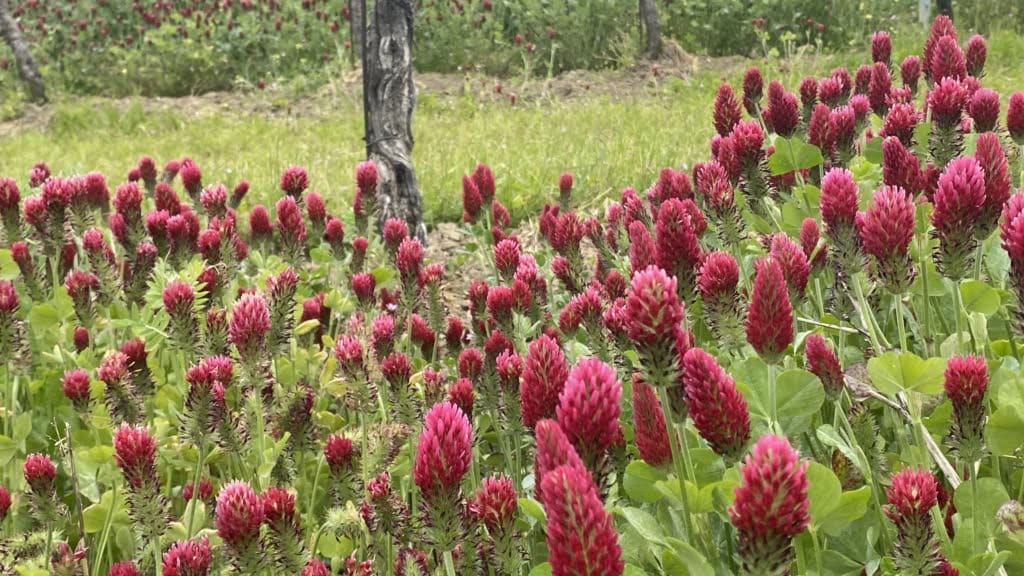
This dual function - weed suppression and soil improvement - makes crimson clover especially valuable in low-input, organic, and regenerative growing systems.
Attracting Beneficial Predator Insects
One of the most visible benefits of crimson clover is its ability to attract beneficial insects. The nectar-rich flowers provide food for predatory insects such as lady beetles, lacewings, hoverflies, and parasitic wasps.
These insects play a key role in natural pest control by feeding on common vineyard and garden pests such as aphids, mites, thrips, and caterpillars. By supporting predator insects, crimson clover helps reduce pest pressure without relying on chemical pesticides.
In vineyards, encouraging beneficial insects supports integrated pest management (IPM) strategies and contributes to a more balanced ecosystem. In home gardens, it helps protect vegetables, herbs, and ornamental plants naturally.
Supporting Pollinators and Biodiversity
Crimson clover is also highly attractive to pollinators, including bees and native beneficial insects. While grapevines are wind-pollinated, pollinators play an essential role in surrounding ecosystems and benefit nearby flowering plants, fruit trees, and vegetable crops.
In gardens, planting crimson clover increases floral diversity and provides an important nectar source during periods when other flowers may be scarce. Supporting pollinators contributes to healthier harvests, stronger ecosystems, and more resilient growing spaces.
Inclusive gardening and land management practices that prioritise biodiversity help ensure that landscapes remain productive and sustainable for the long term.
How to Use Crimson Clover in Vineyards and Gardens
Crimson clover is easy to establish and manage, making it suitable for a wide range of growing environments.
When to Plant
Crimson clover is typically sown in autumn or early spring, depending on climate and growing goals. Autumn planting allows the plant to establish before winter and provide early spring growth, while spring planting works well for short-term soil improvement.
Where to Plant
- Vineyards: Between vine rows, either alone or as part of a mixed cover crop blend
- Gardens: Fallow beds, raised beds, between crop rows, around fruit trees, or as a living mulch
How to Manage
Crimson clover can be mown, slashed, or cut back before flowering to maximise nitrogen release, or allowed to flower to support beneficial insects. It can be incorporated into the soil as green manure or left on the surface as mulch.
FAQs - Crimson Clover
Yes. Crimson clover is well suited to small gardens, raised beds, and even community garden plots. It is easy to grow, low maintenance, and provides multiple benefits in a limited space.
When managed correctly, crimson clover does not compete excessively. Regular mowing or cutting back prevents it from using too much moisture or nutrients while still delivering soil and ecosystem benefits.
No. Crimson clover generally does not require fertiliser. In fact, it improves soil fertility by fixing nitrogen naturally, making it ideal for low-input systems.
Crimson clover is an annual plant. It is typically grown seasonally and then terminated by mowing, frost, or incorporation into the soil. It can be replanted each year as part of a crop rotation or soil-building plan.
Absolutely. Crimson clover is widely used in organic, biodynamic, and regenerative agriculture because it improves soil health, supports biodiversity, and reduces reliance on synthetic inputs.



Get involved!
Comments